Go Hiking: Infuse Your Designs with Outdoor Adventure
There's a certain feeling that washes over you when you hit the trail. It’s the crunch of gravel underfoot, the scent of pine, the vast, open sky. Capturing that specific, adventurous spirit in a design project can be a challenge. You want something that feels authentic, energetic, and connected to the outdoors, but you also need it to be clean, professional, and highly legible. This is the exact space where the Go Hiking typeface excels. It’s a premium font that doesn’t just spell out words; it tells a story of exploration and nature with every letter.
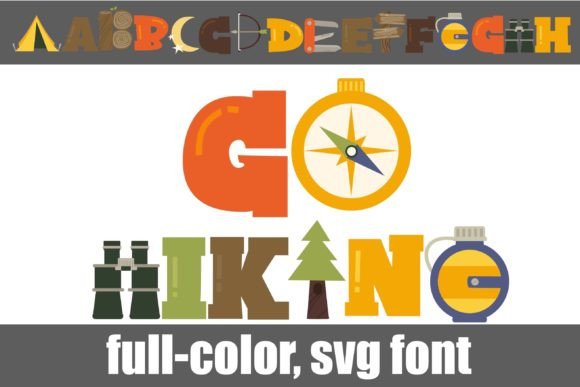
Go Hiking is a full-color SVG font, a modern typography format that allows for incredible detail and vibrant, multi-colored graphics directly within each glyph. Unlike a standard font where you might apply a color to the entire letter, each letter in this creative font is a miniature work of art. Imagine the letter 'A' constructed from a pair of crossed hiking poles, the 'O' shaped like a campfire with flickering orange and yellow flames, or the 'T' formed by a sturdy tent. The color is baked in, creating a rich, illustrative look that is impossible to achieve with a standard typeface. It’s this blend of playful illustration and strong, readable structure that gives Go Hiking its unique personality—outdoorsy, friendly, and full of life.
Where Adventure Meets Application
The true power of a specialized display font like Go Hiking lies in knowing where its strengths shine. This isn't your go-to for long blocks of body text; its role is to grab attention, set a tone, and inject personality. Think of it as a headline artist or a branding specialist for niche markets. For logo design, particularly for outdoor gear companies, adventure travel blogs, summer camps, or local hiking clubs, Go Hiking provides an instant, recognizable identity. It communicates your brand’s core mission without a single word of explanation.
Beyond the logo, its applications are incredibly diverse. In packaging design, it can make a product jump off the shelf. Picture it on labels for trail mix, craft beer with an outdoorsy theme, or eco-friendly camping supplies. For editorial design, a magazine cover for a travel publication or a chapter opener in a book about national parks would be electrified by its presence. The font’s energy is also perfect for digital platforms. It can transform social media graphics, creating eye-catching posts and stories that stop the scroll. Use it for event posters, festival banners, or even custom merchandise like t-shirts and hats. The key is to treat it as a hero element—a design asset that delivers a powerful visual punch.
Crafting a Cohesive Brand Identity
Choosing a typeface is a strategic decision that directly influences brand perception. When you select Go Hiking, you are making a conscious choice to align your brand with values like adventure, nature, authenticity, and fun. This builds immediate recognition and helps you connect with a specific audience that shares those values. The font’s inherent personality does a lot of the heavy lifting in your brand identity, allowing you to build a cohesive visual language around a central theme of exploration.
However, a strong brand identity relies on more than just a single standout font. This is where the art of font pairing becomes critical. Because Go Hiking is so expressive and detailed, it pairs best with simpler, more neutral companions. A clean sans serif font like Montserrat or Lato for body copy creates a beautiful contrast, allowing the headlines to sing without overwhelming the reader. A simple, sturdy serif font could also work for a more classic, established outdoor brand feel. Avoid pairing it with other decorative fonts, a busy script font, or a detailed handwritten font, as this will create visual chaos and undermine professionalism. The goal is to create a clear visual hierarchy, where Go Hiking leads the charge and its supporting typefaces handle the informational details with grace and readability.
A Practical Guide to Using This Creative Font
Getting started with a full-color SVG font is easier than you might think, but there are a few key things to know. First, installation is straightforward. You install the .OTF file just like any other font, using FontBook on a Mac or the Control Panel on Windows. The most common point of confusion is compatibility. This commercial font relies on modern OpenType technology, so it will only display its vibrant colors in programs that support SVG fonts. If you try to use it in an older or incompatible program, it will simply appear as a standard black font.
Here are a few practical steps to ensure a smooth workflow:
- Check Your Software: As of now, popular programs like Adobe Photoshop, Illustrator, InDesign, QuarkXPress, Silhouette Studio, and Inkscape fully support full-color SVG fonts. Always type out a test word to confirm the color is rendering in your document.
- Evaluate the Project Fit: Ask yourself if the project’s tone is a match. Is it playful, adventurous, and informal? If so, Go Hiking is likely a great fit. For a corporate law firm or a luxury watch brand, you’d want to choose a different typeface.
- Review the Styles: A well-designed premium font often comes with more than just the base letters. Check if Go Hiking includes a set of standard black-outlined glyphs or a simpler, non-colored version. These alternatives are invaluable for applications where full color isn't feasible or desired, ensuring consistency across all your materials.
- Understand the License: Before using the font in any commercial capacity—whether for a client’s logo, a product you sell, or monetized content—be sure to thoroughly read and understand the licensing agreement. This protects both you and the font’s creator.
By treating Go Hiking as a specialized tool in your design assets toolkit, you can unlock its full potential. Use it to create web design hero sections that captivate, print materials that feel tangible and memorable, and a brand identity that genuinely resonates with the spirit of the great outdoors. It’s more than just a font; it’s a gateway to creative storytelling.